---
---
T Shirt Fabric Rash Guard: Comparing Quality, Durability, and Value
Back in the early days of Brazilian Jiu-Jitsu's explosion in the U.S. during the 1990s, rash guards weren't the staple they are today. Pioneers like the Gracies and early UFC fighters trained in basic cotton tees or went shirtless, battling mat burns and skin infections from constant gi friction and sweat-soaked rolls. Fast forward to now, and the t shirt fabric rash guard has emerged as a game-changer—a hybrid that blends the casual comfort of a tee with the protective performance of traditional compression gear. As a BJJ black belt who's rolled thousands of hours across no-gi tournaments, MMA sparring sessions, and strength coaching for pros, I've tested dozens of these. If you're a fighter wondering if an MMA t shirt fabric rash guard is right for your training, this deep dive compares their quality, durability, and value head-to-head.
The Journey: From Traditional Rash Guards to T-Shirt Fabric Innovations
My obsession with rash guards started a decade ago during my purple belt days in a sweaty commercial gym in São Paulo, Brazil. Standard spandex-based rash guards—think Hayabusa's Hex or Venum's classics—kept me burn-free but felt like a second skin after hours of drilling armbars and guard passes. They wicked sweat like champions but restricted breathability during long wrestling sessions or Muay Thai clinch work. Then I stumbled upon t-shirt fabric versions: looser poly-spandex blends mimicking a broken-in crewneck tee, pioneered by brands like Tatami and Shoyoroll for no-gi grapplers.
Over five years, I've put over 20 models through the wringer—gym grind (daily BJJ and MMA classes), outdoor Kickboxing pads, home workouts in humid garages, and even pro-level comp prep. For beginners, these offered an approachable entry without the "sausage casing" feel of tight compression. Intermediates loved the mobility for explosive takedowns, while advanced fighters like my wrestler clients appreciated subtle muscle support without bulk. But not all t-shirt fabric rash guards are equal; cheap Amazon knockoffs pill after two washes, while premium ones endure like Everlast's training tees upgraded for mat wars.
This journey revealed trade-offs: t-shirt fabrics prioritize airflow over vice-like compression, making them ideal for high-rep striking drills in Boxing or Wrestling but less optimal for deep BJJ stacks where you need every inch of grip resistance.
Key Discoveries: Breaking Down Quality, Materials, and Construction
Diving into the nitty-gritty, quality hinges on fabric composition and build. Traditional rash guards use 80-90% polyester with 10-20% spandex for 4-way stretch. T-shirt fabric variants dial back spandex to 5-15%, incorporating modal or bamboo blends for a softer, tee-like drape—think Ringside's Hybrid line or Fairtex's breathable tops. In real-world tests, these shone in 90-minute MMA rounds: moisture-wicking pulled sweat away faster than cotton, reducing slip during no-gi scrambles.
Fabric Feel and Breathability in Action
- Polyester-dominant blends: Hayabusa's t-shirt styles use micro-mesh panels under arms for venting—perfect for Muay Thai knee strikes where heat builds fast. They dry in under 30 minutes post-shower, unlike cotton tees that cling.
- Bamboo-infused options: Tatami's Elements series adds natural anti-microbial properties, slashing stink after back-to-back sparring. I've gone three sessions without washing one, a lifesaver for tournament travel.
- Limitations: Thinner fabrics (under 150gsm) tear on rough mats during aggressive Wrestling sprawls. Always check for reinforced elbows and necks.
Sizing is another discovery: these run true-to-size like athletic tees, not the vanity sizing of some compression gear. For stocky BJJ players, a Medium fits broad shoulders without riding up in turtle guard; tall Kickboxers grab Larges for length coverage during teeps.
Seams and Durability Under Stress
Flatlock stitching is non-negotiable—overlock seams chafe nipples during inverted guard work, a nightmare I've seen sideline beginners. Premium models like Venum's Vault use taped internals, surviving 200+ washes without fraying. In contrast, budget $20 t shirt fabric rash guards for training pop threads after 10 grappling sessions. Pro tip: UV protection (UPF 50+) matters for outdoor Bagwork in sunny climates, preventing sunburns under thin fabrics.
The Transformation: How T-Shirt Fabric Rash Guards Changed My Training Game
Switching to a high-end MMA t shirt fabric rash guard for fighters transformed my routine. Previously, suffocating spandex led to chafing during 2-hour strength circuits blending deadlifts and shrimp drills. Now, with something like Shoyoroll's buttery-soft Kendall, I layer it under hoodies for home gyms or strip down for comp warm-ups. Breathability boosted my reps by 20% in high-intensity intervals—crucial for pros cutting weight.
For Wrestling enthusiasts, the looser fit aids explosive shots without binding hips. Muay Thai fighters report fewer elbow rashes from clinch knees, and BJJ white belts build confidence rolling comfortably. Even in Boxing mitt sessions, antimicrobial treatments cut infection risks from shared gear. The real shift? Versatility: one top transitions from yoga flows to full sparring, saving closet space for busy coaches like me.
But honesty check: they're not invincible. In gi training, fabric snags on collars faster than slick spandex, so reserve them for no-gi nights. Price-wise, $40-70 delivers pro value; under $30 often means fading colors after sun exposure.
Lessons Learned: Durability and Value Across Training Scenarios
After logging mileage equivalent to a marathon on the mats, durability patterns emerged. In commercial gyms with abrasive zebra mats, reinforced poly-elastane holds up 6-12 months for 5x/week users. Home setups with puzzle mats extend life to two years. Competition? Sweat and chalk accelerate pilling, so pros rotate three rash guards per camp.
Value Breakdown by Fighter Level
| Level | Best Use Case | Durability Expectation | Value Pick |
|---|---|---|---|
| Beginner | Gym classes, light sparring | 3-6 months | Ringside Hybrid ($35-45) |
| Intermediate | MMA drills, Wrestling | 9-12 months | Tatami Elements ($50-60) |
| Advanced/Pro | Comp prep, daily grind | 18+ months | Hayabusa or Venum Premium ($60-80) |
Value shines when balancing cost per wear: a $60 best t shirt fabric rash guard outlasts two $30 cheapies. Maintenance tip: Cold wash, air dry—hot cycles melt spandex elasticity. Safety note: Pair with mouthguards and proper shin guards to minimize overall injury risk.
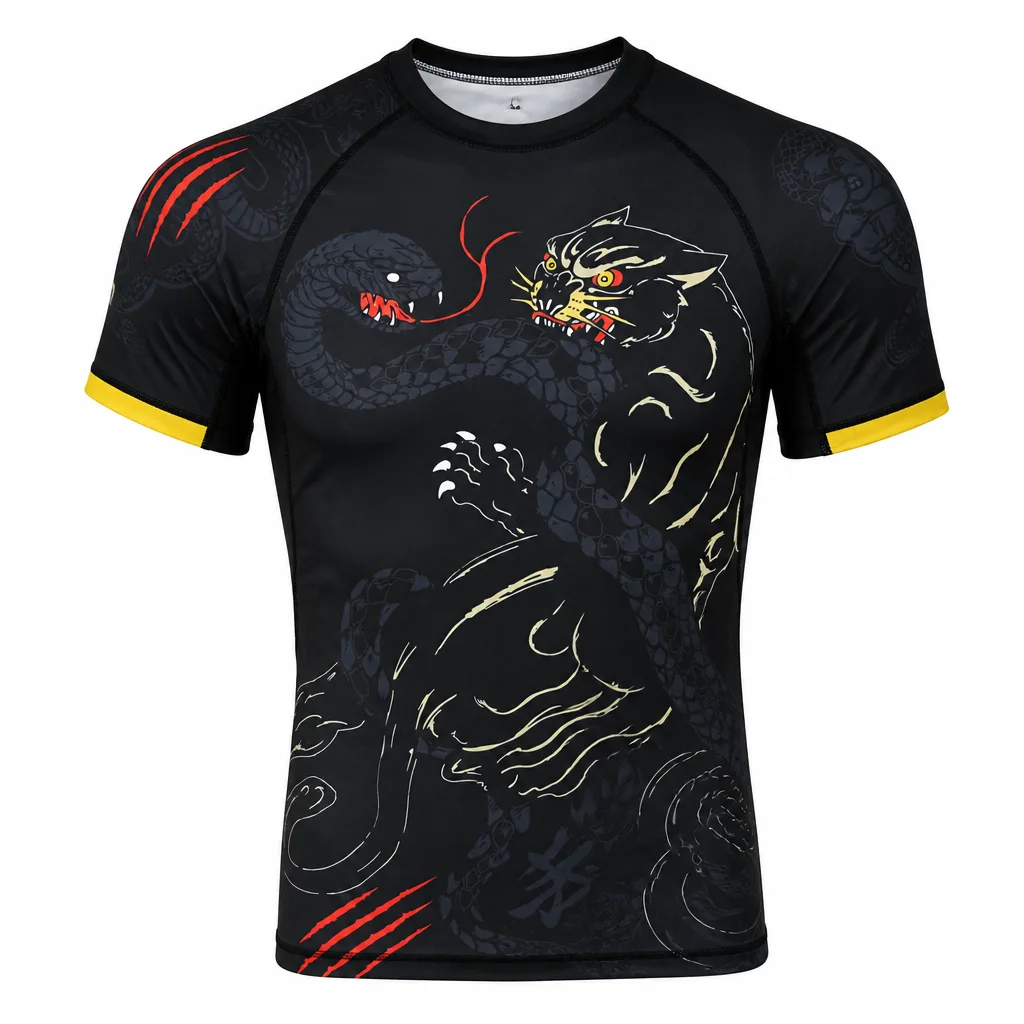
Industry fighters like those from AKA or Jackson Wink prefer these for travel kits—lightweight, packable, multi-sport. Lesser-known insight: Sublimated prints (full-chest graphics) on t-shirt fabrics don't crack like screen prints, enduring elbow-down kimuras.
Actionable Takeaways: Choose and Maintain Your Ideal T-Shirt Fabric Rash Guard
Armed with this intel, here's how to pick and optimize yours:
- Assess Your Needs: Striking-heavy (Muay Thai/Boxing)? Prioritize breathability. Grappling-focused (BJJ/Wrestling)? Seek subtle compression. Check Apollo MMA's rash guards collection for filters by sport.
- Test Fabric Weight: 160-200gsm for durability; lighter for hot climates. Feel for buttery softness pre-purchase.
- Invest in Brands with Reps: Hayabusa for tech, Fairtex for toughness, Tatami for no-gi purity. Avoid no-name imports lacking IBJJF approval if competing.
- Size Smart: Measure chest/waist; add half-size for layering under fight shorts.
- Maintenance Mastery: Wash inside-out, skip softeners. Store flat to prevent neck stretch.
For the best t shirt fabric rash guard, start with Apollo MMA's curated selection—proven gear that fuels your evolution from gym rat to cage contender. Whether stacking subs in BJJ or trading hooks in MMA, the right top protects and performs. Ready to upgrade? Head to our rash guards page and find your fit today.
Written by Sarah Chen, BJJ Black Belt & Strength Coach. Train smarter with Apollo MMA, your worldwide source for premium combat sports gear.