Wrestling Shoes
Low-profile shoes with soles built to grip a mat and let the foot feel it.
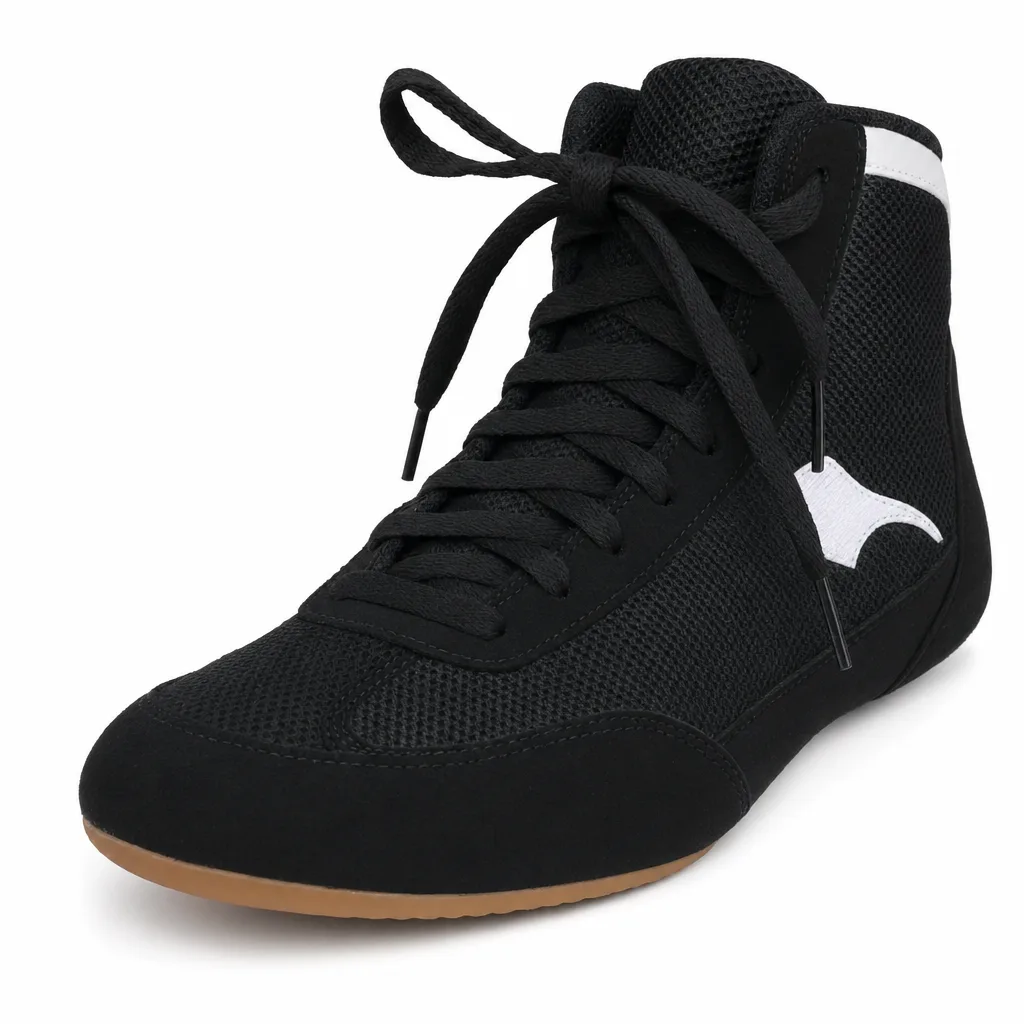
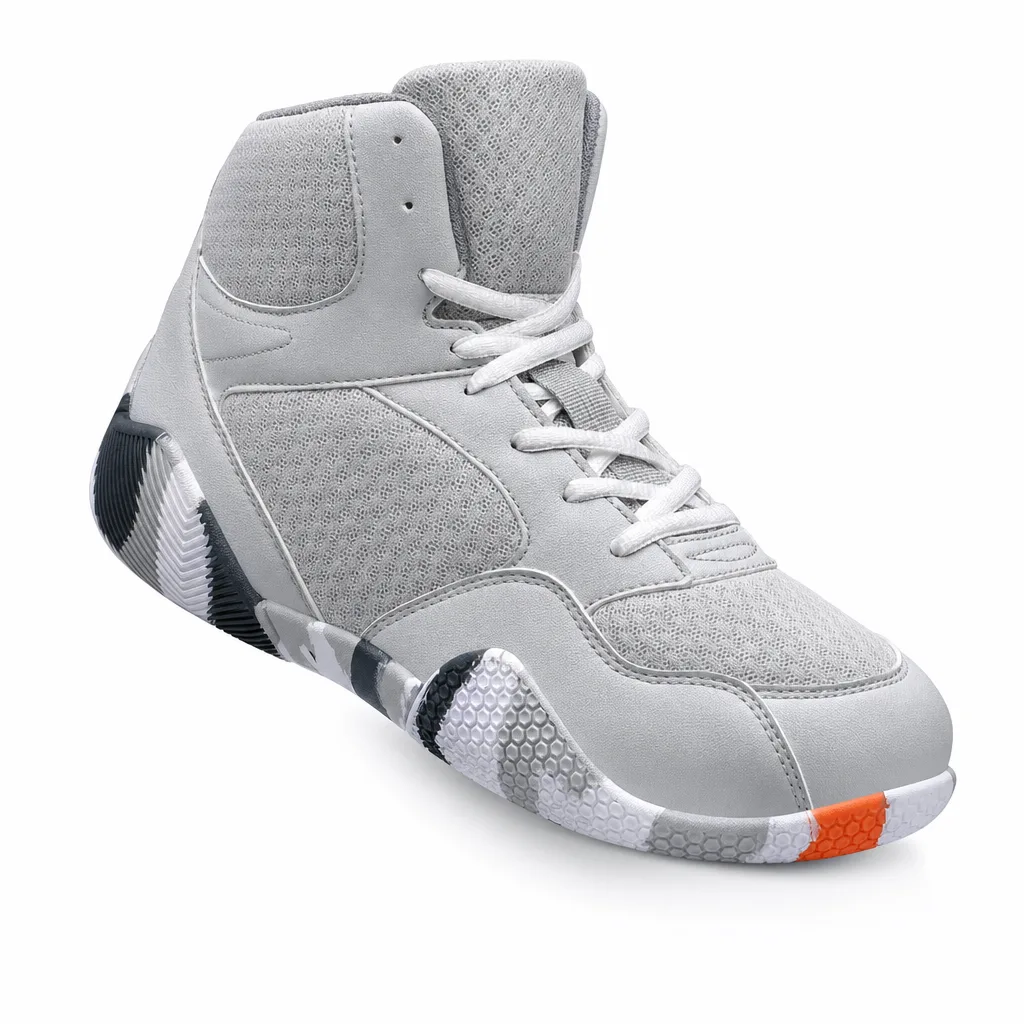
Sole, cut and sizing
A wrestling shoe is closer to a slipper than to a trainer, and everything about it follows from the surface it works on. The sole is thin gum rubber with a split under the arch so the foot can flex, and it is designed to grip a mat without marking it. There is essentially no cushioning, because cushioning puts distance between your foot and the floor and every bit of that distance is feedback you lose about where your weight actually is.
This is why running shoes do not substitute. A running sole is thick, soft and built to roll the foot forward through a stride — on a mat that same construction rolls your ankle in a shot, tears the mat surface, and hides the traction information you need. Most rooms will not let a street shoe on the mat at all, both for the mat and for the hygiene of everyone training on it.
High-top or low-top is a genuine preference rather than a rules matter. High-tops wrap the ankle and are the traditional choice, and wrestlers who shoot hard and often tend to prefer the extra wrap. Low-tops are lighter, cooler and quicker to get on, and are more common in grappling and no-gi rooms where the shoe is optional to begin with. Neither offers real injury protection at the ankle — the wrap is proprioceptive more than structural, so choose on feel.
Size snug. A wrestling shoe should fit like a sock with a sole, close along the whole foot with no slide at the heel and no gap at the toe, because any movement inside the shoe is movement your foot makes that the mat does not see. Most people take their normal shoe size or a half size down; almost nobody sizes up. Lace through every eyelet and tuck the ends under the lace garage or tape them — a loose lace on a mat is a stoppage at best and a trip at worst.
They wear out from the inside. The upper will look fine long after the sole has gone glassy and stopped gripping, and a shoe that slides in a stance is finished regardless of how it looks. Air them out after every session, never leave them in a closed bag, and keep them off pavement — a few walks across a car park will scrub the tread off a gum sole faster than a season of mat work.
Frequently asked questions
- How should wrestling shoes fit?
- Snug all round, like a sock with a sole — no heel slide, no gap at the toe. Most people take their normal size or a half size down. Any movement inside the shoe is feedback the mat never gives you.
- High-top or low-top wrestling shoes?
- Preference, not rules. High-tops wrap the ankle and suit wrestlers who shoot hard and often; low-tops are lighter and more common in grappling rooms. The wrap is proprioceptive rather than structural, so neither is meaningfully more protective.
- Can I wear running shoes for wrestling?
- No. A thick, soft running sole rolls the ankle in a shot, damages the mat and hides the traction feedback a thin gum sole gives you. Most rooms will not allow street shoes on the mat at all.
- Can I use wrestling shoes for BJJ or grappling?
- For no-gi and grappling rooms that allow footwear, yes — the thin split sole is the same tool. Most BJJ is trained barefoot, so check with the gym first.
- When should I replace wrestling shoes?
- When the sole goes glassy and stops gripping in a stance, which happens well before the upper looks worn. Keeping them off pavement is the single biggest thing that extends their life.